What was the aim of Operation Sindoor? Why was the operation halted so soon? asks Lieutenant General Prakash Katoch (retd).

Interacting with the Indian diaspora in Kuala Lumpur, Banerjee said, "We have been in talks with them (Pakistan) for decades, despite changes in various paradigms and governments. But one thing remains constant, the conflict with Pakistan."

The visiting personnel will also ascertain difficulties, if any, being faced by the "families of our war heroes", he said.
A top American military commander has said that the US is watching the situation very closely after Indian military strikes on terror targets in PoK and Pakistan's Punjab province. The United States Indo-Pacific Command (USINDOPACOM) is one of six geographic Unified Combatant Commands of the United States Armed Forces, headquartered in Hawaii. Earlier on Wednesday, US President Donald Trump said he wants India and Pakistan to stop the conflict, saying if he can do anything to help, he will be there. Foreign Secretary Vikram Misri told reporters in New Delhi on Wednesday that the Indian military carried out a measured, non-escalatory, proportionate, and responsible strike to dismantle terrorist infrastructure in Pakistan to deter and to pre-empt any further terrorist strikes.

Prime Minister Narendra Modi will chair a meeting of the Union Council of Ministers on Wednesday, the first after India's punitive military action against Pakistan under Operation Sindoor launched in response to the Pahalgam terror attack.
'Non-BJP state governments and their leaders, navigating today's political landscape, know well they have no clue what awaits around the corner.' 'The chances of charges pressed and oneself getting parked in custody play out on an uneven playing field,' points out Shyam G Menon.

A new report highlights the financial dependence, health challenges, and social isolation faced by India's elderly population, calling for greater support and inclusion.
In his first address to National Democratic Alliance MPs in over a year, Prime Minister Narendra Modi on Tuesday emphasised its collective identity as a natural and organic alliance, asserting that its journey since its foundation in 1998 is dotted with successes and has many more achievements in store.

Army Chief General Upendra Dwivedi asserted that Operation Sindoor was unlike any conventional mission and that it was akin to playing a game of chess as 'we did not know' what would be the enemy's next move.
11, 13, 15 are not some random odd numbers but the number of days that Prime Minister Narendra Modi took to act against Pakistani terror strikes on Indian soil.
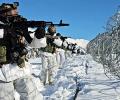
Pakistani troops violated the ceasefire along the Line of Control (LoC) in Poonch district of Jammu and Kashmir, prompting a strong response from the Indian Army. The incident, which occurred in the Krishna Ghati sector, comes a day after two Indian Army personnel were killed in an IED blast near the LoC. The ceasefire violation is the fourth cross-border incident in five days and the first this year.

The landmine exploded when the troops were patrolling in a forward area in Digwar sector this afternoon, the officials said.

Players from Kolkata Knight Riders and Chennai Super Kings, along with BCCI officials, lined up along the boundary ropes at Eden Gardens to pay a heartfelt tribute to the Indian armed forces.

"It is still not too late. India must speak clearly, act responsibly, and use every diplomatic channel available to defuse tensions and promote a return to dialogue in West Asia," Gandhi asserted.
'5465 was over 17,000 feet -- our eyes were out of the sockets by the time we got to the top.' 'We had not eaten in 2-3 days and climbed in extremely difficult terrain.' 'I was there for 5-6 days, but had to be evacuated because I started vomiting blood.'

'It was mad, obviously there were those attacks in Kashmir before everything really kicked off. Then within no time things just rapidly escalated and all of a sudden we're in the middle.'
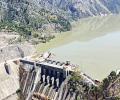
India rejects this so-called "supplemental award", the ministry of external affairs said, referring to the ruling in the case related to Pakistan's objections to Kishenganga and Ratle hydropower projects.
External Affairs Minister S Jaishankar says Operation Sindoor conveyed India's resolve to act against terrorism, following UN Security Council's call to bring Pahalgam attackers to justice.

Indian Army launched Operation Sindoor on May 7 to destroy nine terror infrastructures in Pakistan and Pakistan-Occupied-Kashmir in retaliation to the Pahalgam terror attack. All subsequent retaliations to Pakistani offensives were carried out under the moniker Operation Sindoor.

Pakistan's former foreign minister Bilawal Bhutto-Zardari on Monday said his country will go to war if India denies Islamabad its fair share of water under the Indus Waters Treaty (IWT).
Glimpses from India and around the world that will make you smile and cry.
India's robust air defence system effectively thwarted Pakistani attempts to target Indian installations.
India expects Turkiye to strongly urge Pakistan to end its support to cross-border terrorism, said ministry of external affairs spokesperson, Randhir Jaiswal during the weekly briefing on Thursday.

The Indian Army has released a booklet on Operation Sindoor, which was launched to avenge the April 22 ghastly Pahalgam attack in which Pakistan-backed terrorists brutally killed 26 civilians, mostly tourists, and left many injured.
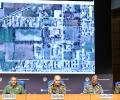
'We completely destroyed at least three posts, an ammunition depot, fuel storage facility, and gunnery, among other targets. Our retaliation was so devastating that it will take Pakistan at least 8-12 months to rebuild, possibly longer'

Following the Pahalgam terror attack, the Indian Army launched Operation Sindoor, targeting Pakistani terror infrastructure and posts in the Poonch sector of Jammu and Kashmir. Over 600 artillery shells were fired in three days, decimating 20 Pakistani posts used for infiltrating terrorists into India. The precision strikes crippled enemy logistics, material, and morale, prompting retaliatory attacks by Pakistan on civilian areas. Despite the retaliation, Indian Army officers described the operation as a success, highlighting the high morale of the troops and the effective coordination between artillery and air defense units. The article details the intensity of the artillery shelling and the impact on both sides, highlighting the strategic significance of the Poonch sector and the ongoing tension between India and Pakistan.

A villager was killed and three others were injured in shelling by Pakistan in forward areas of Jammu and Kashmir's Poonch and Rajouri districts early Friday morning, prompting Army troops to retaliate. The shelling also caused significant damage to property, with many houses and hundreds of vehicles affected. The firing and shelling were directed at areas in Rajouri, Poonch, and Jammu districts, apart from Kashmir's Kupwara and Baramulla districts, overnight.

The Pakistan Army continued shelling along the Line of Control (LoC) in four sectors of Jammu and Kashmir, prompting a befitting response by the Indian Army, officials said on Thursday. The intensity of cross-border firing was less than Wednesday, when Pakistan Army carried out one of the most intense artillery and mortar shelling in years targeting the forward villages in J-K following missile strikes by India as part of 'Operation Sindoor'.

It was Prime Minister Narendra Modi who picked the evocative term 'Operation Sindoor' to codename the Indian armed forces' strikes on nine terror sites in Pakistan and Pakistan-occupied Kashmir, official sources said on Wednesday.
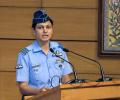
Wing Commander Vyomika Singh, an accomplished helicopter pilot in the Indian Air Force, was chosen to brief the nation about India's 'Operation Sindoor' strikes on Pakistan. She has flown a variety of aircraft and taken part in rescue operations in extreme conditions. Vyomika, who has logged over 2,500 flying hours, has operated helicopters across challenging terrains, from the high-altitude sectors in Jammu and Kashmir to the remote areas in the Northeast. She led a rescue operation in Arunachal Pradesh in 2020, flying in extreme conditions to evacuate civilians.
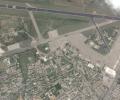
Pakistan's Prime Minister Shehbaz Sharif admitted that India's ballistic missiles hit Nur Khan Airbase and other sites on May 10, a rare acknowledgement that contradicts Pakistan's usual stance of denial when it comes to Indian military action.
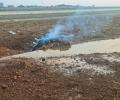
Dar's statement, echoed by another federal minister, came as the Indian and Pakistani militaries targeted each other's installations using missiles in the last more than 12 hours, further escalating the already tense conflict situation.
India's sporting fraternity, including Olympic medalists Neeraj Chopra and PV Sindhu, expressed grief and condemnation over the deadly terrorist attack in Pahalgam, Kashmir.

The Indian and Pakistani militaries targeted each other's installations using missiles in the last over 12 hours, further escalating the already tense conflict situation.
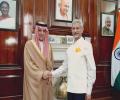
The Saudi statement came as tensions soared significantly, with Pakistan claiming that its three airbases were targeted by Indian missiles and drones early Saturday.

The worst-hit in the Pakistani shelling was Poonch district which accounted for all the civilian deaths, the officials said, adding 28 persons were also injured and the condition of some of them was stated to be critical.
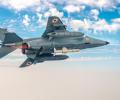
India's precision strikes using an array of weapon systems and missiles on eight key installations ranging from air defence systems to radar sites and command centres of the Pakistani military forced Islamabad to urge New Delhi to end the hostilities, the sources said.
Indian cricketers - both past and present - have voiced strong support for the armed forces following a daring cross-border strike
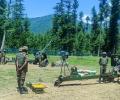
'The precision strikes were well planned and excellently executed. The world will be studying this operation.'

Operation Sindoor is not just a name but India's latest policy against terror as it has set a new standard, a 'new normal' in counter-terrorism measures, Prime Minister Minister Narendra Modi asserted on Monday.
